
One of the most common questions we hear from families caring for an ageing, chronically ill or terminally ill pet is:
“How will we know when it’s time?”
It is a question no pet carer ever wants to ask, yet for many families it becomes one of the most difficult decisions they will ever face.
At Dignipets, we have spent more than a decade supporting pets and their families through hospice care, quality-of-life discussions and end-of-life decision-making. During that time, we have learnt that while the question of when matters, another question is often just as important:
“What would a good death look like for this pet and this family?”
This is where the idea of contextualised euthanasia begins.
Euthanasia Is About More Than Timing
When people think about euthanasia, conversations often focus on a single moment.
Is it too early? Is it too late?
Should we wait another week? Should we try one more treatment?
These questions are important and deserve careful thought.
But they can sometimes make it feel as though the decision is purely medical.
The reality is that every pet is part of a family, and every family has different circumstances, values, experiences and concerns.
A dog with advanced cancer is never just a dog with cancer.
They may be the companion helping someone through widowhood. They may be a child’s first pet. They may be supporting an elderly carer living alone.
They may be part of a family whose culture, faith or personal beliefs influence how they think about illness, death and loss.
The diagnosis may be similar. The context rarely is.
What Does Contextualised Euthanasia Mean?
For us, contextualised euthanasia means recognising that there is no single “right” approach for every family.
It means considering not only a pet’s medical condition, but also:
- Their quality of life
- Their welfare and comfort
- The family’s goals and wishes
- Practical circumstances
- Cultural, spiritual or religious beliefs
- How and where they would like to say goodbye
- The support they may need before, during and after euthanasia
Most importantly, it recognises that euthanasia is not simply a clinical procedure.
It is a deeply personal life event.
One that deserves the same thought, compassion and individualisation as every other aspect of care.
Why Families Often Need Support Before They Need Answers
One of the biggest misconceptions about end-of-life care is that families need someone to tell them what decision to make.
In our experience, that is rarely what people are looking for. Most pet carers already know their pet better than anyone else.
What they often need is support in understanding their options, making sense of their feelings and recognising the changes they are seeing.
This is exactly why we developed our Online Veterinary Hospice Consultations.
Our team acts as your guide.
Every consultation is delivered by experienced, RCVS-registered veterinary professionals who are certified in Veterinary Hospice and Palliative Care and have spent many years supporting families through difficult decisions.

We do not tell you what to do.
Instead, we help you understand your options and what quality of life looks like for your individual pet.
Sometimes families tell us that the greatest relief comes from simply having someone listen, answer questions and help them make sense of an uncertain situation.
You can learn more about our online hospice consultations here.
There Isn’t One Right Way
Two families facing very similar medical situations may make very different decisions, and both decisions may be entirely appropriate.
One family may feel that their pet’s quality of life is declining and choose a peaceful euthanasia sooner rather than later.
Another may choose a period of hospice care because symptoms remain well controlled and their pet continues to enjoy meaningful moments.
Neither choice is automatically right or wrong.
What matters is that decisions are guided by the pet’s welfare and made with a clear understanding of the options available.
Contextualised euthanasia recognises that every family arrives at this point from a different place.
Tracking Quality of Life Can Help
Many families struggle because changes happen gradually.
A pet may still enjoy food, affection and favourite activities on some days, while struggling on others.
This can make decision-making incredibly difficult.
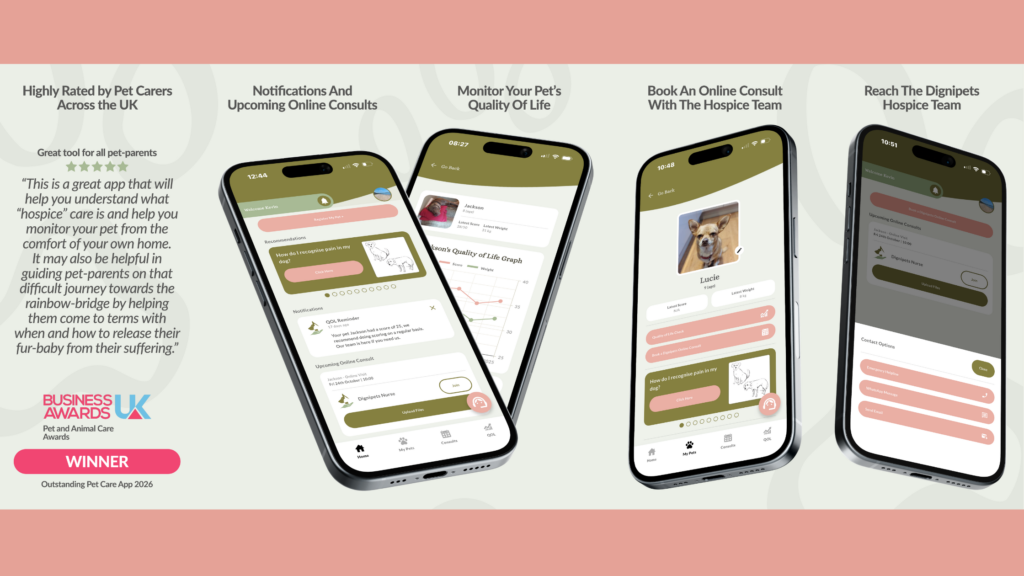
To help families feel more confident and informed, we developed the Dignipets Quality of Life Tracker App.

The app allows pet carers to record quality-of-life observations over time, helping them identify trends rather than relying on a single good day or bad day.
Many families tell us that seeing those patterns helps them feel more prepared for conversations about future care and long-term planning.
You can explore the app here.
A Goodbye That Reflects Your Wishes
When families look back on their pet’s final days, they often remember much more than the decision itself.
They remember:
- Whether they felt supported
- Whether they understood what was happening
- Whether they had enough time
- Whether they felt listened to
- Whether their wishes were respected
Some families prefer euthanasia at home, surrounded by familiar sights, smells and routines.
Others feel more comfortable attending their veterinary practice.
Some want children present.
Others prefer a quieter and more private goodbye.
Some families want prayer.
Others want music.
Some want a favourite blanket, toy or special treat nearby.
Others simply want peace and time together.
There is no right or wrong answer.
What matters is finding an approach that feels meaningful and appropriate for your pet and family.
Faith, Culture and Personal Beliefs Matter
Families experience death, grief and loss in different ways.
For some people, faith or spirituality plays an important role.
For others, cultural traditions or family customs help shape how they wish to say goodbye.
Some families have particular wishes about:
- Burial or cremation
- Time spent with their pet afterwards
- Prayers or blessings
- Memorial keepsakes
- Family involvement
- End-of-life rituals
These conversations matter.
In fact, they are often central to what makes a farewell feel peaceful, respectful and meaningful.
Contextualised euthanasia encourages us to recognise and honour those differences wherever possible.
Aftercare Matters Too
One of the biggest lessons we have learnt is that care does not end when a pet dies.
Many families remember what happened afterwards just as clearly as they remember the euthanasia itself.
Did they have enough time?
Did they feel rushed?
Were they given choices?
Did they feel supported?
For some families, a paw print becomes a treasured keepsake.
For others, it may be a special ceremony, a memorial garden, individual cremation or simply quiet time to say goodbye.
There is no right way to grieve.
But there is value in recognising that aftercare is part of the journey, not separate from it.
You Don’t Have To Navigate Grief Alone
Grief often starts long before a pet dies.

Many pet carers experience anticipatory grief while caring for a pet with a life-limiting condition.
The sadness, worry and uncertainty can be exhausting.
And of course, those feelings do not simply disappear after a pet dies.
That is one of the reasons we created the Dignipets Pet Loss Support Network.
The network helps connect families with resources, support, education and organisations that understand the profound impact of pet loss.
You can find out more here.
It’s Not About Doing Everything. It’s About Doing What Fits
Many families worry about making the wrong decision. They worry about acting too soon. They worry about waiting too long. They worry about regret.
The truth is that end-of-life decisions are rarely black and white.
What we can do is focus on what matters most.
Your pet’s quality of life. Your pet’s comfort. Your family’s circumstances. Your goals, values and wishes.
Rather than asking whether there is a single correct answer, contextualised euthanasia asks:
What feels right for this pet, this family and this situation?
A Different Question
When families ask:
“How will we know when it’s time?”
they are often looking for certainty.
Unfortunately, certainty is not always possible. What is possible is exploring what matters most.
What quality of life means for your pet. What your hopes are. What your worries are. What kind of final chapter you would like your pet to have.
And perhaps most importantly:
“What would a good death look like for this pet and this family?”
Because euthanasia is not simply about ending suffering.
It is about helping families create a final chapter that reflects the love, care and bond they have shared throughout their pet’s life.
At Dignipets, we believe every pet deserves an individualised approach to end-of-life care and every family deserves support, guidance and compassion throughout that journey.
We believe there is no single “right” way to say goodbye.
Every pet is different. Every family is different.
Our role is to walk alongside you, helping you understand your options and make decisions that feel right for your pet, your family and your circumstances.
Because sometimes the most important question is not:
“When is the right time?”
But:
“How can we make this time as peaceful, meaningful and compassionate as possible?”